Wednesday, August 22, 2018

5 Reasons to Move Your ERP To Cloud


“I don’t need a hard disk in my computer if I can get to the server faster, carrying around these non connected computers is byzantine by comparison.” — Steve Jobs

Many companies are still worried about whether they should move their ERP to the cloud or not. Well, having a virtual office can prove to be really beneficial for every type of organization, hence moving your ERP to cloud is always a great idea.
Businesses require flexibility, scalability, and most importantly security and all of these are provided by the cloud at an affordable price. IT departments are always on the lookout for time and money saving software, therefore it can be a smart move if companies switch to cloud.
According to a survey conducted by the market research department :
32% of the companies want to reduce the maintenance cost.
28% of the companies want more flexibility in accessing the information.
25% of the companies want to streamline their work process.
22% of the companies want more affordable alternatives.
But if you are still not convinced and confused about whether moving from ERP to cloud is an immediate need or not, then have a look at few of the compelling reasons:
Enhanced Security
Every organization, especially small and medium, requires additional security and the cloud systems are perfect for providing the safe and secure environment. The cloud system offers secure gateways for data management so the data does not get leaked to a wrong person.
These cloud-based ERPs are the pre-built templates that fulfill the international as well as domestic standards. The improved security and reduced cost might force you to shift from ERP to cloud-based ERPs now.
Reduced Cost
Traditional ERP system required a huge investment as routers, switches, computers along with few unexpected costs were very expensive. Well, all these costs can be completely eliminated with the cloud-based ERP system. The cloud system follows the rule of, “pay as you go” which means it can put an end to all the initial capital costs.
Not only the hardware costs, cloud ERP can eradicate the server maintenance cost which decreases the workload of the IT department. This means the cloud-based ERP can save a lot of working hours of your company.
Remote access
The Cloud-based ERP platforms can be accessed from any remote location with an ease which means it can be accessed securely from any browser. This is great if an employee is out of office and still needs to access some data, cloud ERP just makes it easy. It makes the employees work easy and comfortable whereas the traditional ERP is time-consuming and less productive. Also, cloud-based ERP can eliminate the corruption and security breaches.
Also Read: Deep Insights Into Cloud-Based ERP Applications
Faster Innovation:
The cloud-based ERP systems are much more flexible than the traditional ERP. Not only that, but cloud ERP encourages the innovation as well. It further helps in making a faster clone of the development and production process. This makes it easy for doing research and innovations without disturbing the company’s operation.
Data Recovery: 
In tradition ERP system, there is always a risk of losing data completely. The Cloud ERP removes this problem as ERP clouds have redundancy which means the data is placed in two places so if it is lost from one position then we have data at another place. The data in the cloud ERP can be survived in any situation.
CONCLUSION:
Cloud-based ERP system helps companies to gain access to robust collaboration tools which helps them to identify any problem instantly and accurately. The Cloud-based ERP solutions can help your business to evolve completely and at an affordable price. In a nutshell, a cloud-based ERP can generate better returns, reduce cost, increase flexibility and security. These are the few reasons which endorse the benefits of moving your traditional ERP to the cloud-based ERP system.

Friday, August 17, 2018

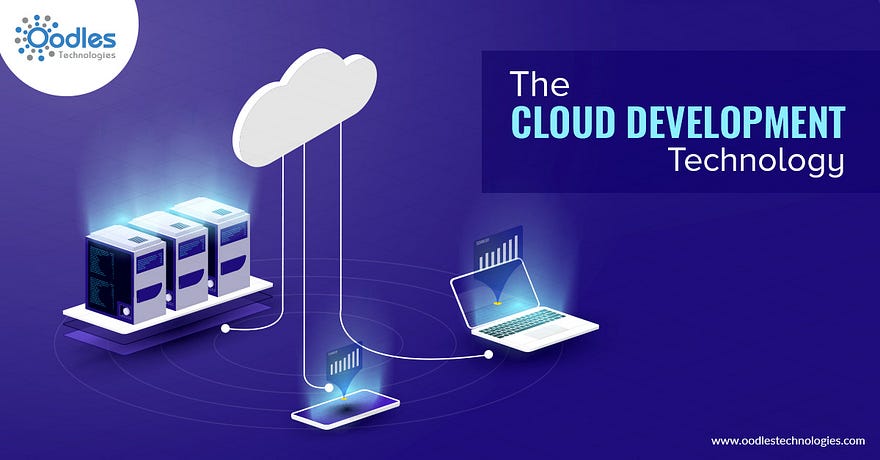
Reshape Your Services With The Cloud Development Technology

Reshape Your Services With The Cloud Development Technology
The lightning transformation of cloud development technology is allowing enterprises to deploy services more securely, measure them, and modify them at a much faster pace. At the same time, if they are not coping up with the evolution, it can swiftly lead to ending up with a dainty cloud implementation. However, as the stupendous advantages of cloud development become highly recognized, most organizations are striving to amalgamate the way they develop for the enterprise and the cloud. Also, it is a little difficult for the organizations to keep up with the development of new cloud development tools and practices as they are being updated almost as frequently as possible. Keeping that in mind, here are few revolutionizing cloud technology developments that the enterprises can never afford to ignore.

Microservices’ Shift To Kubernetes

Microservices are becoming highly penetrative; everyone is either deploying in accordance with that or at least planning to do so. And as more organizations undertake a pure Kubernetes approach to cloud development, it is, therefore, becoming the major “Operating System” of the microservices.
Also Read How To Improve Cloud ERP With AI And Machine Learning
Kubernetes not only initiates containers and allows basic connectivity for enabling microservices to function together but it is also non-opinionated and permits businesses to implement various tools to sweep out the chunks that it can’t really handle. In addition to this, local storage is not the desirable stateful storage area, instead, enterprises should include microservices with high-performance network storage.

Service Mesh Integration

The most recent advancement of cloud microservices development inculcates using tools known as service meshes. Basically, it is a proxy between microservices that assists with networking glitches and also provides several features that reflect what is happening in your services or applications.
Putting service mesh to use is almost similar to messaging platform integration tool since some features could permit simple integration of latest service-level enhancements, thereby, stimulating organizations to build services that are more reliable and fault tolerant.

DevOps’ evolution to GitOps

Since microservices are capable of populating tens of hundreds of containers, “infrastructure as code” or “GitOps” is becoming more visible as the standard approach for recognizing where microservices are standing, hence, ensuring enterprises to function more effectively.
Although GitOps is an evolution of DevOps, however, it does not really change the basic idea of DevOps and thus can be continued to be used as earlier.

Serverless Functions

The most essential aspect of serverless computing is that organizations are only invoiced for the duration these functions are executed and since there is no such vital requirement of particular nodes, serverless computing can lead to cutting down the cost by over 95%.
Also, the serverless functions including the targeted applications can give out marvelous results and should never be overlooked when you are trying to save some costs.
Also Read Cloud Computing And Its Testing Tools
Therefore, I believe that imposing greater automated testing is essential to ensure that the organizations will be well positioned in the near future with the help of cloud development technologies. What are your thoughts about it? Let us know by writing down in the comment section below or contact us if you are looking for leveraging cloud technology development in your business.

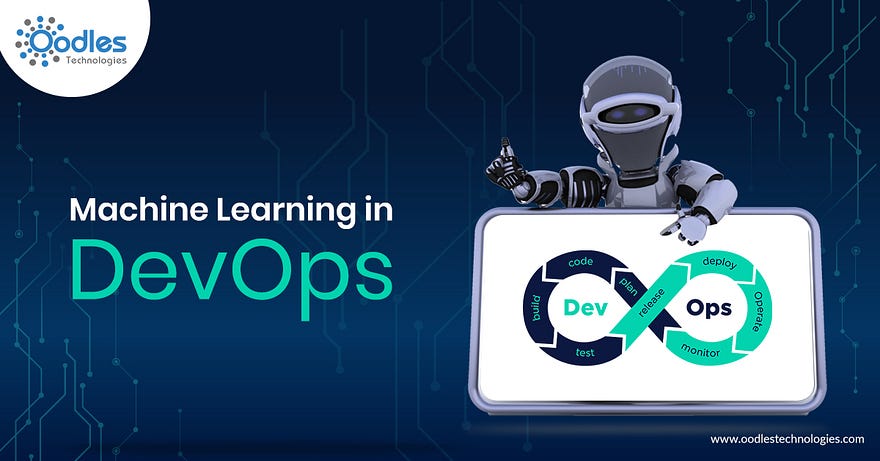
Advantages of Machine Learning in DevOps

DevOps and Machine Learning are the technologies that are creating a combined impact on the software industry today.
As the DevOps engineers are expected to understand the working nature of the codes, infrastructure, cloud, and, other things, incorporation of machine learning into their work culture seems to be more promising.
Technologies today are pushing the boundaries that mankind would have ever dreamt of. Though there is no real substitute for intelligence and hard work, we witness a positive impact in businesses today with robotics, machine learning, artificial intelligence; evolving software development cultural practices and trends like DevOps, blockchain development, and so forth.
DevOps [truncated term for Development and Operations] is a bold new strategy getting implemented by the IT industries who are in search of the outcome-based model. All of them carry the main objective that is, create, test, release, and support the software at a reliable, scalable, and faster rate, that are closely aligned with the business objectives.
On the other hand, Machine Learning, an algorithm category, facilitates the data-driven automation for applications and predict the outcomes more accurately. It is able to receive the data input, analyze the statistics, predict the output, update the data, and, so forth. It is pushing the businesses to explore and implement data analysis model.
However, the DevOps advantage, when combined with harnessing, monitoring, and, analysis of the data it creates, is forecasted to help the team to optimize the operations in a better manner.
The potential of Machine Learning to make the DevOps smarter is the talk of the techno-town today and is becoming the key area to explore in the future.
In brief, the DevOps methodologies and machine learning are parallelly evolving and is logically considered for a successful outcome in combination.
Here is a brief note about how both these giant technologies could be implemented in combination for deriving better benefits in business.

How Machine Learning Benefits DevOps Methodology?

Till date, most of the teams depend on threshold monitoring approach wherein conventional habit and wisdom are the factors to rely on. This has resulted in a high signal-to-noise ratio and alert fatigue.
But, when you consider machine learning, it is of mathematical, statistical, and logical. That is, it is more grounded as it uses the models namely linear and logistic regression, deep learning, classification, and, etc., to scan the data sets, trends, correlations, and make the logical predictions.

Optimizing DevOps with Machine Learning:

  • Machine Learning Application may analyze all the large data in store and help for predictive analysis.
  • The possibilities of looking at data in many forms and combinations are easier like velocity, bugs, metrics, continuous integration system, and, etc.
  • It delivers the data as per the needs like daily, weekly, monthly, or so; and trends like seasons, festivals, geography, and, etc., for gaining a complete insight.
  • The collection of data and its analysis helps to rule out the root causes, investigate the failure, and other issues easily.
  • It determines the efficiency of the orchestration and helps to analyze the tools and processes for more efficient and directed planning.
  • It helps to optimize a specific metric like maximizing the uptime, reduce the deployment time, maintain the standard performance, and, etc.

Advantages of Machine Learning in DevOps Methodology:

There are varied illustrations, where machine learning could be effectively implemented to DevOps. A few of them are mentioned below.
1.Machine learning implication on DevOps tools like Jira, Jenkins, Puppet, and, etc., identifies the software wastes like inefficient resources, partial work, task switch, process slow down, and other shortfalls that are faced during application delivery.
2. It helps to review the QA results, detect the errors, ensure proper testing, and thus raise the quality standard of the deliverables.
3. It helps to ensure the security of the applications by detecting the backdoors in coding, deployment of unauthorized code, theft against intellectual property rights, and etc., based on user behaviors and exercising patterns.
4. It analyzes and detects the abnormal pattern in usage, group the alerts based on transaction ID, servers, subnet, and, etc., enabling filtration. This, in turn, manages the alerts by reducing the alert storms and fatigue.
5. The machine learning tools can detect the anomalies in the process, operations, alerts, and suggests best-fixing measures. It automatically detects and also triages the known issues in a more intelligent manner.
6. It analyzes user metrics and its impact on the business at an early stage itself. For instance,
Cart abandonment, click through rates, user registrations, and, etc. This serves as an early warning for the businesses to take effective measures wherever needed.

Challenges of Machine Learning in DevOps:

It is understood that the machine learning tool implementation is still limited owing to several challenges. A few of them are highlighted below.
  • We find technical challenges among the DevOps practitioners as there is the need for better understanding about these technologies like machine learning, Artificial intelligence, and/or the predictive analysis. Example: Logarithms, statistics, linear algebra, programming, trigonometry, and, etc.
  • Further, implementation of machine learning itself is a challenge at the organizational level. Integration of it with DevOps is not yet understood completely and the management is not unanimous to support the decision.
  • The Hiring of a new team, encouraging the existing team to meet the DevOps and Machine learning challenges by upgrading themselves is still in the process.

What Next?

The effectiveness of machine learning is dependent on DevOps processes. By understanding the benefits a machine-learning DevOps infrastructure could provide to the business processes, and its implementation is anticipated to bring success in project management.
If the integrations are correlated and evaluated efficiently, the technology is going to create wonders in business processes positively.
It is expected that the proliferation of the frameworks would make the algorithms easier than the present scenario. As more professionals are expanding their skills in machine learning, we may expect more use cases in the near future.
Machine learning is able to map the best possible patterns for enhanced performance and infrastructure.
Thus, the implementation of machine learning in DevOps is highly recommended today.

Wednesday, August 1, 2018

Blockchain App Development Services

Blockchain has sparked a new technological revolution across the globe. After transforming the FinTech industry, the latter has now made its way to different industries like Insurance, Finance, Real-estate, Travel, Healthcare and Automotive. Consequently, the demand of Blockchain App Development Services has shot up lately.
Blockchain is a series of blocks that are chained together electronically to create an enormous database containing a pool of information. The data stored in Blockchain is secured by cryptography. As a matter of fact, Blockchain uses the most advanced from cryptography developed to this date. And it creates a permanent and tamper-proof record of information which is almost impossible to delete or modify.
Blockchain is the key technology behind Bitcoin that backs the entire cryptocurrency domain. Additionally, every single node on the Blockchain network retains a permanent copy of the ledger following the security concerns.
Why Choose Oodles Technologies?
We, at Oodles Technologies, provide best-in-class Blockchain App Development Services tailored to the requirements of our clients. We are pioneers in building world-class web and mobile applications based on Blockchain. With the availability of custom modules, we help you save your time and money.
The team of Blockchain Developers working with us is highly proficient in building high-octane Blockchain based applications with 100% uptime, intuitive UI and less complexities.

AWS Advances IoT With New Services

IoT will be the next big thing in the world of technology. There is so much buzz around this technology. According to the statistics, Internet of Things is going to be the largest device market in the world. Owing to its popularity and importance, various sectors of business are recognizing its power and benefits arising from it.
Expectedly, IoT innovations will be embraced by the diverse sections of economy. In this direction, Amazon web services have announced a new OS and IoT services to foster the deployment of Internet of Things. These services will ease down the work process involved in the configuration of IoT devices. What is really important in IoT technology is its data analysis gathered by IoT devices in real time. All of these services by AWS do analysis on the data collected by IoT devices
AWS’s new operating system named Amazon FreeRTOS is designed for low power devices such as smoke detectors, light bulbs. The problem with these devices is that they cannot have their own CPUs due to their small size. It will simplify to build in cloud support for manufactures.
As stated by Tara Walker, technical evangelist for AWS, Amazon FreeRTOS holds a purpose of removing complexities in the development process and deployment process. Also, it extends its support for the maintenance of microcontroller-based edge devices and their security.
AWS has introduced services such as 1-Click, Device Management, Device Defender, Analytics, and Greengrass ML Inference under AWS IoT platform. These services provide help in deploying IoT devices speedily with safe environment. The role AWS IoT platform is to gather data and analyze from IoT devices, sensors. Further, it connects that data to AWS cloud applications. The analytics capabilities of these new services will make use of the massive amount of data collected by internet-connected devices.
AWS IOT 1-click is a service that allows customers to enable device with the AWS Lambda function. For it, they have to download a mobile app and do registration. And then they need to choose an AWS IoT 1-Click enabled device and associate this device with an AWS Lambda function. For instance, sending SMS or email messages. This is intended to do normal tasks like reordering goods, tracking goods location etc.
Another service which AWS Greengrass offers a new feature of AWS Greengrass ML Inference. AWS greengrass service has machine learning abilities which provide tools to IoT devices to make use of machine learning models that let these devices to make decisions more quickly. Still without access to the cloud, it offers these features. Customers can deploy machine learning models on IoT devices easily.
You may also read: Apple Partners With GE On Industrial IoT Applications
Analytics from AWS IoT, is a preview version that cleans, processes, store and analyzes data from IoT devices at scale. AWS IoT Device Management is developed for helping firms to make onboarding easier, remotely manage, monitor devices, update software, troubleshooting and patching defective systems.
According to Amazon web services, Device Defender is expected to be available in 2018. It provides steady examination and monitors for security issues, such as traffic making way to an unknown IP address.
AWS Company has took this step for making IoT deployment process simpler. As estimated ,IoT market will grow upto $457B by 2020 globally. The Internet of Things is reshaping almost every corner of life including homes, offices, city streets, businesses, economy and beyond.

Monday, July 23, 2018

NodeJS Web Development Company

Looking for a holistic web development solution? Welcome to Oodles, the best offshore Node.JS Web Development Company.
Node.JS is an open-source framework based on JavaScript runtime environment to execute JavaScript code server-side. It is used for building websites and web applications. This free framework can run on several platforms like Linux, Unix, Windows, Mac OS X and a few others. With the use of JavaScript, Node.js lets developers run scripts to make dynamic page content. Node.js is one of the fundamental elements of the “JavaScript everywhere” paradigm. This allows web application development to unify around a single programming language, rather than rely on a different language for writing server-side scripts. It is also a part of MEAN Stack. Its major use is in backend operations and by the Full Stack Developers.
NodeJS offers cross-platform web app development. It is capable of creating, writing, deleting, closing, reading and opening files present on the server side. Its event-driven architecture is capable of asynchronous I/O and it helps to optimize throughput and scalability in Web applications with many input/output operations, as well as for real-time Web applications. The framework supports all the prime computer platforms like Windows, Linux, and Mac OS X.
Major Advantages of using Node.JS
  • Faster code execution
  • Has an asynchronous and event-driven architecture
  • The single threaded model however highly scalable
  • No data buffer
  • The issued license under MIT license
Why Choose Oodles Technologies?
We, at Oodles Technologies, provides top-notch NodeJS Development Services. We are a leading Node.JS Web Development Company with more than 7 years of experience and we understand that every client is different with different needs. Our team of web app developers is proficient in using JavaScript as well as capable of building avant-garde websites and web applications. Our only motto is to deliver the best results to the clients and fulfill all their requirements at an affordable price. We have an extensive portfolio of clients from all over the world and excel in providing world-class web development services to our clients.

4 Programming Languages You Can Use to Create Chatbots

Choosing an AI (artificial intelligence) programming language is not difficult but it can be confusing. So, if you are one of then who gets confused to pick the right programming language for Artificial Intelligence then you have come to a right place.
1. PYTHON:
Python is one of best programming language for creating Artificial Intelligence chatbots. This object-oriented language is widely used by the developers all around the world. There is the number of reasons behind the popularity of python, such as:
  • The large variety of libraries which can be used in AI.
  • Less development time
  • Easy to write chatbots in Python
  • High-level syntax
2. JAVA:
Java is also a great choice. It is an object-oriented programming language that focuses on providing all the high-level features needed to work on AI projects, it’s portable, and it offers in-built garbage collection. Java has some amazing features for the development of AI programming chatbots. They have their own community which is there for you whenever you are stuck somewhere. It provides various features:
  • Scalability
  • Garbage collection
  • Portable
  • Easy to code algorithms
3. C++
There is no other language which can compete C++ in terms of the speed. This has become the advantage for AI. C++ is the best choice when comes to machine learning and neural network building as it is the fastest programing language in the world. Various other features of C++ over other languages are:
  • When you need high performance it is a great choice
  • Algorithms can be written extensively in C++
  • Provides high-level abstraction
  • Useful for time-sensitive projects
4. Lisp
Lisp is quite an old programming language but it is still used in developing artificial intelligence chatbots. It is used in many AI projects such as projects, such as Macsyma, DART, and CYC. various features of Lisp are:
  • Symbolic structure of Lisp makes it highly used language for creating AI chatbots.
  • automatic garbage collection
  • Easy coding