Wednesday, May 27, 2020

Enabling Accelerated Learning with Augmented Reality

Augmented reality (AR) is a technology that has applications in the education sector to simplify and accelerate learning about complex concepts. The technology adds a virtual layer in real-time within real world settings so learners can better relate to study topics. At Oodles Technologies, we receive similar AR Application Development Company inquiries from clients who want us to create interactive 3D 4D models for their learning solutions. Our AR/VR app developers use technologies like SparkAR to cater to their requirements.

Let's explore how Augmented Reality is impacting the education sector:-

 
Augmented Reality Classroom: The traditional classroom teaching methods were boring and it was difficult for the students to inherit the concepts easily. Students with different capabilities took longer to understand the concepts without practical demonstration. Augmented Reality (AR) technology uses 3D demonstration models to enable students to deeply understand the concepts in a virtually created environment. Augmented Reality Classroom training is highly beneficial for students with learning disabilities like Dyslexia, Dyscalculia, Dysgraphia. 

 
Star Walk: Constellation Finder: The app enables students interested in astronomy to explore the night sky. Using the app student can discover the stars, constellations, and other objects in the sky. Students can practically demonstrate the movement of stars and other celestial bodies in the night sky. 

The app is designed for the hidden artists. Students can not only color the picture but they can customize its design based on their capabilities. The tridimensional, realistic touch enables students to showcase their creativity and unleash the hidden artist within them. 

– AR has replaced traditional textbooks with 3D and 4D models to make learning materials easily accessible. The technology is less expensive and more interactive for the students to gain practical knowledge. Education can be made accessible to students in remote areas with the help of Augmented Reality classrooms. Schools are now using AR animated content in the classrooms to increase students’ engagement within the topic. Students can use AR-enabled headsets like Oculus Go to scan the elements of a book and receive audio, video, and text from the teachers. 

To make chemistry fun and engaging for the students, an AR app Elements 4D was released. The students have to first make paper cubes from the special element blocks. Then the students can add cubes in front of their device’s camera to check chemical elements representations, names, and their atomic weights. Students can bring the elements together to check what chemical reactions happen when two elements meet. 

The space industry has always been the first one to adopt advanced technologies. Astronauts use AR and MR to maintain a space station. AR goggles enable workers to receive visual work instructions without having to look at the manuals. NASA tested the Sidekick project in which HoloLens was used to give virtual instruction and illustrations to the crew members. Also, According to NASA, the technology can reduce crew training requirements.  

Medical Students Training: Augmented Reality technology can be highly beneficial for medical practitioners to perform surgeries in a virtual environment. The technology enables medical students to learn how to deal with real patients students inside the operation theatre within an artificially created environment.  

Augmented Reality Technology can be highly fruitful for the education and training of employees at offices and manufacturing industries. Incorporating AR at schools, colleges, and universities make the learning process easier and effortless. The technology concentrates on the retention of concepts to prevent the students from revision work. 

Looking for Augmented Reality solutions for your business? We are a well established AR apps development company that uses the power of Augmented Reality to learning easier and interactive. Get in touch with our experts for more details!  

Monday, May 25, 2020

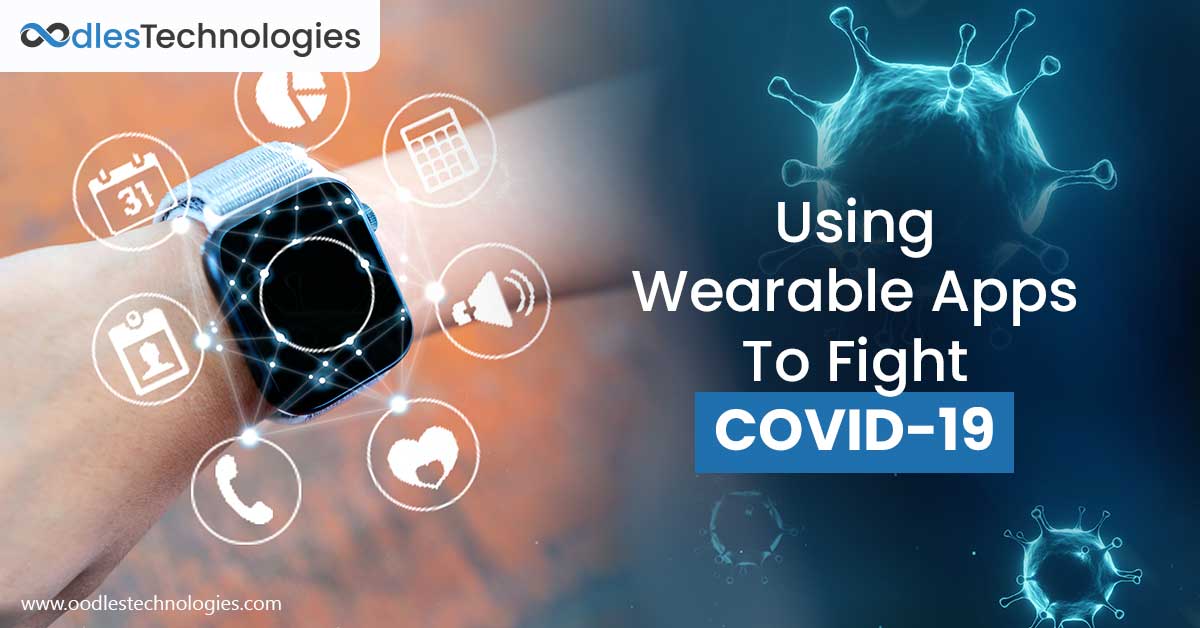
The Significance of Wearable Apps In The Fight Against COVID 19


The wearable technology has grown profoundly over recent years, successfully emerging as an evolving product category. A majority of users cling to wearable devices because of their cutting-edge health-tracking features, not to mention the availability of fitness tracking apps. Having said that, wearable devices and applications can play a significant role in curbing the spread of the novel coronavirus, COVID-19. It’s been several weeks since the COVID-19 outbreak was declared as a global pandemic and it continues to spread across the globe. 

With preventive measures in place like social distancing, mass quarantines, and nationwide lockdowns, we have been able to reduce the rate of contagion. However, containing the spread still seems difficult in the absence of a suitable vaccine. People are looking for innovative solutions to mitigate the risk of community transmission. Several tech enthusiasts have suggested that mobile and wearable app development can be a crucial step in overturning this fight against COVID-19.

In this blog post, we are going to discuss the main benefits of using wearable apps and IoT app development services to strengthen the containment efforts for COVID-19. 


Tracking COVID-19 Patients

Using wearable apps seems like a promising solution to accurately track the active COVID-19 patients in various states and districts. Considering the huge worldwide userbase of wearable devices, it can be an effective solution to avoid contact with potentially infected people. As a matter of fact, several healthcare organizations in various countries have already launched wearable apps for the exact same purpose. For example, the US-based healthcare technology company, Kinsa is tracking users’ data via its smart thermometer app which supports both smartphones and smartwatches. 

A similar endeavor is initiated by the researchers at Northwestern University in collaboration with a prominent medical lab in Chicago. They have developed a wearable device that uses a set of data algorithms for the early detection of COVID-19 symptoms in suspected users. Furthermore, it continuously monitors the signs of illness as it progresses. 

At Oodles Technologies, we are capable of developing similar apps with technology integrations for a wide range of wearable devices. We have previously worked with clients to build high-quality fitness tracking apps for popular Android Wear and watchOS smartwatches. 

Real-time Alerts and Push Notifications

Another benefit of wearable app development is the inception of an early warning system that would alert users whenever they are close to a containment zone. We can design wearable apps to provide real-time alerts and notifications to keep users informed about the COVID-19 situation in their area. These apps will also provide early warning signals to help users keep the virus at bay. Developing such applications is particularly useful for frontline workers who are putting their lives on the line to curb the spread of COVID-19. 

Continuous Health Monitoring

The biggest challenge before the healthcare communities is the uncertain characteristics of the novel coronavirus. Researchers are still not able to accurately identify the mysterious ways that this virus is affecting the victim’s body. There have been several instances where the COVID-19 victim didn’t show any signs of illness while still infecting others who came in contact. Having said that, continuous health monitoring is essential to identify the asymptomatic cases that pose an even greater risk of contagion. In that case, wearable technology can provide a promising solution for real-time health analysis of the potential COVID-19 victims. 

You may also be interested in reading The Future of Retail With The Internet of Things

The Security Concerns

An increasing number of users are concerned about their privacy while using wearable apps that aim at fighting a global pandemic. Since these apps are going to use your personal health data and share it with other users, it makes sense too. However, developers can ensure that user identity is not revealed in any manner. For example, one can develop an app that would notify the user to stay alert when he enters a containment zone. Similarly, a wearable app with temperature sensors can detect the average body temperature of people coming in contact with the app user.  

Why Choose Oodles Technologies For Wearable App Development?

We, at Oodles Technologies, provide end-to-end SaaS solutions with a focus on web and mobile app development. We specialize in building user-friendly apps for a wide range of wearable devices including Apple Watch and Android Wear watches. Our development team is experienced in using advanced tools, cutting-edge technologies, and agile methodologies to develop feature-rich wearable apps. Our wearable app development services enhance user interactions and deliver engaging user experiences across devices. We also specialize in developing high-quality IoT applications to centrally manage an increasing number of connected devices. 

5 IoT Advancements To Expect In 2020

The Internet of Things (IoT) network is rapidly expanding with billions of connected devices that collect and share data everyday. IoT technology extends internet connectivity beyond traditional computer devices to a variety of day-to-day equipment. IoT development services have enabled technology companies to launch a variety of smart devices like home assistants, thermostats, smartwatches, and internet-connected vehicles. Once these devices are connected to the internet, they exchange data to render a convenient lifestyle through home automation and other applications. 

Over recent years, there have been tremendous developments and advancements in IoT devices, enhancing their features and capabilities. As we approach the year 2020, research firms like Forrester, Gartner, and IDC are conducting mass surveys to identify the upcoming trends in IoT. In this blog post, we will discuss the potential advancements in IoT that are expected to disrupt various industries in 2020. 


Widespread Adoption of Smart Speaker Displays
 

One of the latest developments in IoT is a Smart Display. The smart display is generally associated with a smart speaker which uses an integrated virtual assistant. It adds a visual element to the smart speaker, giving a face and personality to your virtual assistant. Amazon was the first to launch a smart speaker display (Echo Show) for its Alexa Echo devices. The company unveiled the first look of Echo Show in May 2017 and the first device was launched in October 2018. Similarly, Google has come up with its own range of smart speaker displays under its Google Nest home automation solutions.  

In 2020, we are going to see many other tech giants launch their own versions of smart speaker displays. Lenovo and Samsung have already announced their devices. The social media giant Facebook has also come up with a similar device called Facebook Portal which is available three variants i.e Portal, Portal Plus, and Portal Mini. 

Considering the widespread adoption of smart speakers in recent years, we can say that more people will purchase these devices in 2020.


Improved Logistics and Supply Chain Processes
 

Several manufacturing and retail companies have IoT-integrated ERP systems to efficiently track their logistics and supply chain processes. As we enter 2020 and as the year progresses, we will see widespread adoption of IoT in a number of supply chain processes. Many companies are planning to install IoT devices in shipping vehicles to accurately track the movement of deliverables and raw materials. 

IoT devices will also provide assistance to truck drivers in the form of real-time traffic updates and accurate location details to avoid delays. The idea of self-driving trucks seems far-fetched as of now but the year 2020 will witness significant progress in this field. 

Besides, the IoT revolution in 2020 will significantly improve logistics by enabling transparency across business processes and providing valuable customer insights. 


More Number of Connected Vehicles
 

Automobile companies have invested billions of dollars in connected vehicles. As of today, there is a huge number of internet-connected cars on the road. According to Business Insider, this number is expected to reach 381 million internet-connected cars in 2020 and perhaps even more. Leading motor companies like Tesla, Toyota, BMW, and General Motors are already working on innovative projects to launch self-driving cars. It will connect the number of cars to the internet, thereby providing owners better control over their vehicles.

In 2020, several motor companies are expected to launch IoT-enabled electric cars that will also overcome environmental challenges like pollution and global warming.  

The increasing advancements in vehicle-to-vehicle (V2V) technology will enable connected cars to communicate with each other while on the road. That being said, the V2V technology is critical for the safe commutation of self-driving cars as it enables them to keep a safe distance from each other.


More Devices Will Connect To 5G Mobile Networks
 

A majority of IoT devices use Low Power Wireless Personal Area Networking (LoWPAN) technologies to exchange and transmit data over the internet. It is a low-power wireless network having a unique IPv6 address that connects its nodes to the internet. LoWPAN establishes a low-cost communication over the wireless networks using open standards.

Researchers predict that the newfangled 5G technology will soon replace LoWPAN. In 2020, we are likely to see significant developments in this area as the 5G trials are in full swing in many countries. Several countries like South Korea, Germany, US, and the UK successfully deployed 5G networks in most of their states and provinces. Finland and Switzerland are likely to join these countries early in 2020. 

According to TechRepublic, the 5G technology will strengthen the LoWPAN networks rather than replacing them. It implies that most industries will continue using the LoWPAN networks but in conjunction with 5G solutions for increased flexibility. 


Avail Our IoT Solutions To Strengthen Your Business Applications
 

We, at Oodles Technologies, provide 360-degree IoT application development services to support a wide range of connected devices. We are a seasoned IoT development company that builds performance-driven mobile applications for IoT and home automation devices. Our IoT development services enable businesses to modernize their existing systems, reduce complexities, and enhance customer experiences

Wednesday, May 20, 2020

Making Cities Smarter with the Internet of Things

The IoT technology (Internet of Things) is the key driver for the car, home, and office automation. Various organizations use IoT enabled RFID tags to track the movement of goods in transit. Data gathered through the smart IoT devices can be used by countries to manage traffic, reduce pollution, and make better use of the infrastructure. IoT app development companies are creating apps for controlling digital devices using smartphones, wearables, and other smart devices. 

  • According to IT Pro in 2018 near to 3.6 billion internet-connected were used for daily tasks. 
  • According to Market analysts, the number of connected devices will double from 2017 to 2020. 

 
Some of the popular IoT applications include smart home app development services , wearables, smart cities, smart grids, industrial internet, connected cars, connected health, smart retail, smart supply chain, and smart farming. 


Role of IoT In Making Cities Smarter
Densely populated cities like Tokyo( 37.4 million population), Jakarta(31million), and Delhi (26 million) are facing difficulties in conserving their resources, managing traffic, disposing of the garbage,  and reducing air pollution. Data collected through IoT devices can be used to prevent these capital cities from the effects of a growing population. Introducing IoT to these cities improves the quality of life and reduces the consumption of resources. 
Smart City Components and their Impact in the IoT Era:
1. Smart Infrastructure
  • Digital technologies play an effective role in the management of resources. Buildings and infrastructure must be integrated with IoT systems to minimize resources and achieve sustainability. 
  • Populated countries should maximize the use of electric cars and self-propelled vehicles to reduce CO2 emissions. 
  • Using intelligent technologies can enable cities to achieve energy-efficiency and enable environmental friendly infrastructure
  • IoT enabled occupancy sensors can reduce the daily consumption of electricity. Smart lighting options even set brightness levels to minimize the wastage of electricity.  
    Smart Infrastructure IoT Technologies


Smart Buildings with IoT Sensors
2. The City Air Management Tool (CyAM):
A cloud-based software-suite by Siemens to capture pollution data in real-time and forecast emissions. It forecasts next three to five days emissions with up to 90% accuracy. 

  • An algorithm based prediction works with an artificial neural network
  • The City Air Management Tool with IoT sensors distributed across the city predicts the air quality of the upcoming days and displays it on the dashboard. 

Pollution Control Systems IoT Technology

3. Traffic Management
  • The biggest challenges for populated cities is to optimize traffic
  • Los Angeles,  the busiest cities in the world, implemented an intelligent transport solution to minimize the flow of traffic. 
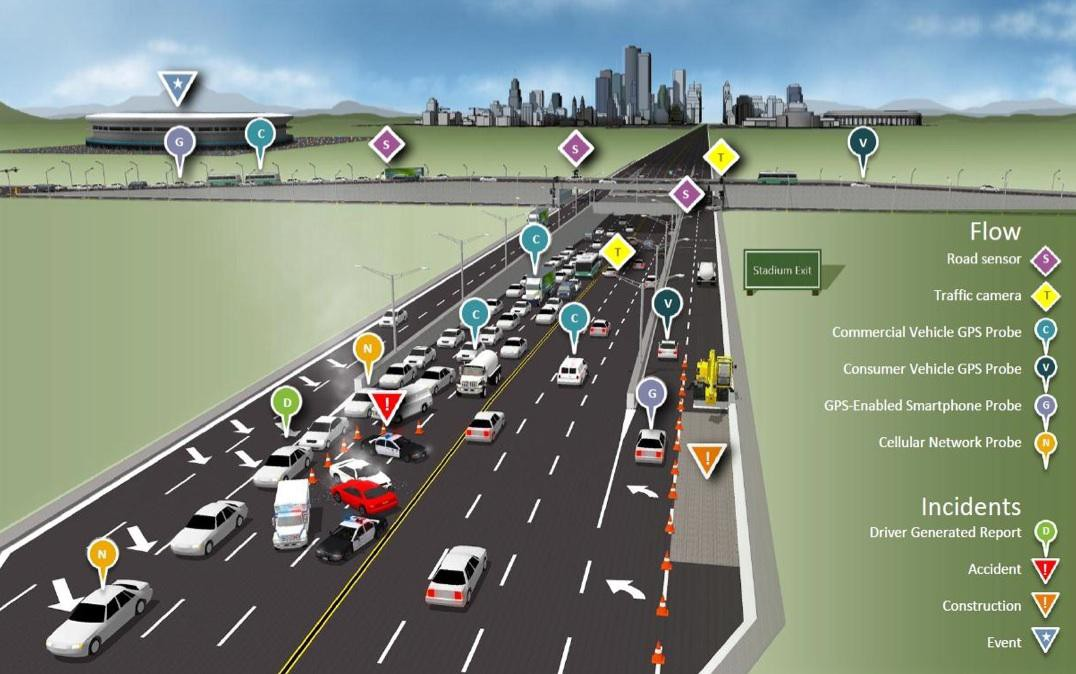
  • Pavement integrated sensors share real-time updates of traffic flow with traffic management platforms to control highly congested roads during traffic situations. 
  • The sensors use historical data to predict the diversion of traffic without human intervention. 

    Smart IoT solutions  

4. Smart Parking
  • People of populated cities need smart parking solutions to identify when a vehicle has left the parking area. 
  • Sensors in the ground report the availability of free parking space to the driver via smartphones
  • Smart parking solutions now prevents mid-sized cities from investing in a  complicated infrastructure 

Smart Parking Solutions IoT Technology

5. Smart Waste Management
  • Populated countries face difficulties to dispose of their wastes effectively. IoT enabled waste management solution segregates renewable and non-renewable wastes to resolve ineffective waste collection issues. 
  • Waste containers with sensor levels share updates on truck drivers smartphones when a threshold reaches the maximum level. The message alert prompts the drivers to empty a full container to avoid half-empty drains.
Smart Cities IoT Technology  
Future IoT Applications

1. Vision Van of Mercedes-Benz
Mercedes-Benz Vision Van is based on a van concept designed for urban areas. It is the first van worldwide characterized by various next-gen technologies onboard including autonomous drone delivery. The digitally connected process chain uses drones to deliver goods within a radius of ten kilometers.  Manual loading takes 2 hours but the automated smart van loads various goods at once within 5 minutes. The drone delivery has reduced the time to deliver goods on the last mile. 
 Vision Van Mercedes Benz IoT
2. Smart Eye
Smart eye technology is equipped with smart IoT sensors, Wi-Fi, and Bluetooth. The technology connects with human actions and intentions to interpret reality.  Smart eye enables users to access their smartphone features right in front of their eyes without any distraction. It enables users to read messages, browse through the web and more.
Smart Eye IoT Technology

The Future of IoT is unlimited. The technology has made changes in various sectors and it is all set to transform the populated cities to prepare them for the future. From waste management to pollution control we provide smart IoT solutions for office and home automation. Our IoT app development experts make smart IoT apps enable users to control their devices(AC, Refrigerators, smart locks) remotely. Get in touch with our experts to make the best use of IoT technology into your business.